What to Eat on a 12-Hour Shift to Stay Sharp
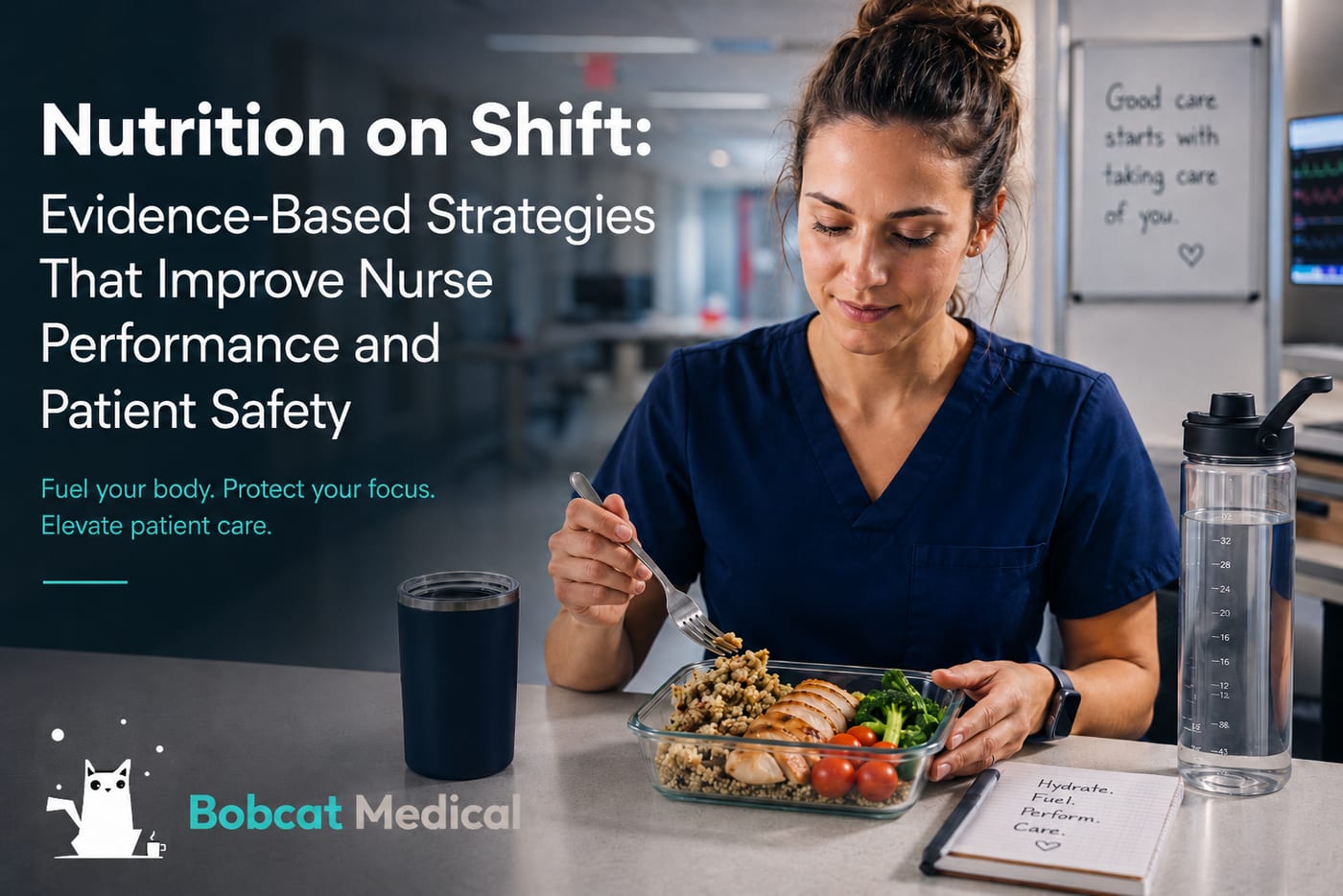
Nurse nutrition is a patient safety issue, not just a personal health choice. This research-backed guide covers what to eat before, during, and after a 12-hour shift based on clinical evidence.
Disclaimer: The information in this blog is intended for educational purposes only and does not constitute medical or nutritional advice. Healthcare professionals with specific dietary needs, chronic health conditions, or concerns about their nutrition should consult a registered dietitian or qualified healthcare provider for personalized guidance. Strategies discussed here are based on peer-reviewed research and are intended to support general occupational health and wellbeing.
TL;DR
Most nurses know they should eat better during shifts but do not have reliable, evidence-based guidance on what that actually means in practice. The research is clear: what you eat, how much you eat, when you eat it, and how hydrated you are have direct and measurable effects on cognitive performance, alertness, and error rates across a 12-hour shift. Large meals impair cognitive performance. High glycemic index foods increase alertness lapses. Dehydration of as little as 2% of body weight impairs physical and cognitive function. And diet quality drops significantly during and after night shifts compared to pre-shift eating, which compounds fatigue across consecutive shifts. This blog breaks down the clinical evidence into practical, shift-tested guidance for nurses, paramedics, and CNAs.
Why What You Eat on Shift Is a Patient Safety Issue, Not Just a Personal Health Choice
Most conversations about nurse nutrition focus on personal health outcomes: weight management, chronic disease risk, energy levels. Those are real and important concerns. But there is a more immediate reason that nutrition during a clinical shift deserves serious attention, and it is the same reason every other factor affecting cognitive performance deserves attention: your decision-making capacity directly affects your patients.
A 2025 real-world observational study published in medRxiv, conducted on 72 healthcare workers across consecutive night and day shifts using wearable devices and continuous glucose monitoring, found that while calorie, protein, and fat intake was reduced during night shifts, glycemic variability and postprandial glucose spikes were significantly increased compared to day shifts. In plain terms: night shift healthcare workers are eating less but experiencing more blood sugar instability, which produces the energy crashes and cognitive dulling that nurses often attribute to fatigue alone.
A 2024 observational study published in MDPI Nutrients surveying 450 healthcare workers found that diet quality scores dropped significantly during and after night shifts compared to pre-shift eating. The same study found that meal skipping, irregular eating schedules, and poor food accessibility were the primary drivers of this decline. These are not individual failures. They are predictable outcomes of a shift structure that rarely protects eating time the way it protects charting time.
A 2025 qualitative study published in Scientific Reports that directly interviewed healthcare shift workers found that participants expressed consistent concerns about meal skipping, irregular meal schedules, food accessibility, and the cascading effects on their sleep, physical activity, and overall wellbeing. The study highlighted that healthcare shift workers face significant systemic challenges in maintaining optimal dietary behaviors, and that these challenges are rarely addressed with the same rigor as other occupational health concerns.
Understanding the clinical research on shift work nutrition is not about following a meal plan. It is about making informed decisions with the same evidence-based mindset you bring to patient care.
Before Your Shift: Building the Right Foundation
Eat before you go in. Every time.
This sounds obvious, but research consistently documents that nurses frequently skip the pre-shift meal in favor of a few extra minutes of sleep or because the timing of their shift makes eating feel inconvenient. According to the American Nurse Journal, the official journal of the American Nurses Association, nurses should eat some form of a first meal of the day before their shift regardless of what time that shift starts. The physiological rationale is direct: glycogen stores are depleted during sleep, and the body cannot access stable energy for sustained cognitive and physical work without restoring them through food intake. A nurse heading into a high-acuity shift on an empty stomach is starting with a biological deficit.
What the research says about macronutrient composition
Not all pre-shift meals produce the same cognitive outcome. A 2023 observational study published in Frontiers in Nutrition and PMC, which studied 128 nurses during night shifts using the Psychomotor Vigilance Task to measure objective alertness, found that a protein-rich or protein-and-carbohydrate-balanced meal produced better overall cognitive performance than a carbohydrate-rich meal alone. The mechanism is well-established: high carbohydrate intake without adequate protein leads to a faster glucose peak followed by a steeper decline, contributing to the mid-shift energy crash that many nurses experience as an inevitable feature of the job rather than a nutritionally modifiable one.
The glycemic index matters more than most nurses realize
A randomized crossover trial published in the Journal of Nutrition in 2024, conducted specifically on 51 female healthcare workers during night shifts, compared low glycemic index and high glycemic index food conditions and measured objective alertness using a validated psychomotor vigilance task. The study found that healthcare workers in the low glycemic index conditions had significantly fewer alertness lapses than those in the high glycemic index condition. Practically speaking, this means choosing foods that release glucose more slowly and steadily, such as whole grains, legumes, eggs, Greek yogurt, and vegetables, over rapidly digested, high-sugar options that produce a fast spike and a faster crash.
Practical pre-shift meal guidance based on the evidence:
- Eat a substantive meal two to three hours before your shift starts rather than immediately before, to allow initial digestion without working at peak metabolic demand during your first clinical hours.
- Prioritize protein and complex carbohydrates together. Examples include eggs with whole grain toast, Greek yogurt with oats and berries, chicken with brown rice and vegetables, or a legume-based salad with a protein source.
- Avoid high-fat, high-calorie single meals immediately before the shift. Research on postprandial sleepiness consistently shows that large, fat-heavy meals increase sleepiness and reduce alertness in the hours following consumption.
- Limit high-sugar foods and refined carbohydrates in the pre-shift window. They produce rapid glucose spikes followed by drops that arrive precisely when you need stable cognitive function most.
During Your Shift: Eating to Sustain, Not to Crash
Small and frequent beats large and infrequent
One of the most consistent findings in the shift work nutrition literature is that large single meals during a shift impair cognitive performance and increase sleepiness. As documented in the American Nurse Journal, citing research by Gupta and colleagues published in Chronobiology International, eating a large meal during a night shift specifically impairs cognitive performance and increases sleepiness. The recommended pattern is one meal and at least two snacks distributed across the shift: a snack in the first few hours, a meal around the midpoint, and a second snack approximately two hours before the shift ends.
Timing matters as much as composition
Research published in Oxford's Sleep Advances journal in 2024 found a time-dependent relationship between carbohydrate intake and cognitive performance in shift workers that has direct practical implications. Specifically, higher carbohydrate intake improved sustained attention when consumed approximately one hour before a cognitive task but worsened attention when consumed two to three hours before the same task. This suggests that the timing of carbohydrate-containing foods during a shift is not arbitrary. Consuming carbohydrates closer to moments of anticipated high cognitive demand may support performance, while consuming them during slow periods may contribute to the post-meal sluggishness that compounds shift fatigue.
Protein as a cognitive stabilizer
The 2023 Frontiers in Nutrition study on 128 nurses found that protein intake in the one to two hours before an alertness assessment was associated with better objective alertness scores. Protein-containing snacks that are practical for clinical environments include hard-boiled eggs, Greek yogurt, cottage cheese, nuts, string cheese, tuna packets, and protein bars with low added sugar. These are foods that can be consumed in the brief windows that clinical work actually allows rather than requiring sit-down meal time that most shift nurses do not reliably have.
Caffeine: Strategic, not reflexive
The evidence on caffeine for shift workers is consistent. According to the American Nurse Journal ANA guidance, caffeine consumed at the start of a shift and during the first four to six hours of work improves alertness and concentration. However, caffeine consumed in the second half of a shift, particularly in the hours before the shift ends, disrupts post-shift sleep quality by extending the time the body takes to transition from clinical alertness to restorative rest. The half-life of caffeine in the average adult is approximately five to six hours, meaning that caffeine consumed at the midpoint of a 12-hour shift is still pharmacologically active when you are trying to sleep afterward.
Practical guidance: use caffeine intentionally in the opening hours of the shift when it supports performance without compromising recovery. Avoid it in the final four to six hours of the shift. Be cautious with energy drinks, which combine high caffeine doses with significant amounts of sugar that produce the same glycemic instability that impairs alertness across the shift.
What to keep in your bag for mid-shift nutrition:
Practical, evidence-aligned foods that work in the real environment of a clinical shift include nuts and nut butter packets, Greek yogurt or cottage cheese portions, whole grain crackers with protein, fresh fruit combined with a protein source, hard-boiled eggs, tuna or salmon pouches, low-sugar protein bars, and small portions of whole grain leftovers from a pre-prepared meal. These are foods that require minimal preparation, can be consumed in brief breaks, and provide the protein-carbohydrate balance the research supports for sustained alertness.
Hydration: The Most Overlooked Clinical Variable in Nursing
Hydration during a clinical shift is not a comfort preference. It is a measurable cognitive variable with direct implications for patient safety.
A prospective cohort study on nurses and doctors on-call published in PubMed, conducted at a university teaching hospital, found that 36% of participants were dehydrated at the start of their shift and 45% were dehydrated by the end. The study concluded that dehydration of as little as 2% of total body weight may impair both physical and cognitive performance, and that trends toward increased clinical error were observed with increasing dehydration. A parallel study on emergency department physicians and nurses published in PMC confirmed that a significant proportion of ED staff showed decreased hydration status by the end of their shifts, and highlighted that healthcare professionals are often unable to drink adequately during clinical work.
The brain is particularly sensitive to changes in water balance. Research consistently shows that even mild dehydration impairs concentration, alertness, short-term memory, and reaction time, the exact cognitive functions most critical to clinical decision-making. A randomized controlled trial on night shift nurses found that maintaining a daily intake of two litres of water significantly improved alertness and psychomotor performance in the intervention group compared to controls.
The reason nurses become dehydrated during shifts is structural, not motivational. Clinical environments do not reliably support drinking during patient care. Call bells, rapid response situations, and the sustained pace of floor nursing create conditions where hydration is repeatedly deprioritized until the cumulative deficit is significant. This is why intentional hydration systems, not relying on thirst as a signal, are the most evidence-supported approach.
Practical hydration strategies supported by the evidence:
- Arrive at your shift already hydrated. Beginning a shift in a dehydrated state means spending the first hours of clinical work in a cognitive deficit before any fatigue from the shift itself accumulates.
- Use a marked water bottle with time-based targets visible during the shift. Thirst is not a reliable early indicator of dehydration. Time-based targets provide an objective prompt that does not depend on subjective awareness of fluid deficit.
- Treat drinking water during breaks as non-negotiable, in the same category as documentation and medication administration. It directly affects your clinical performance.
- Be aware that caffeinated beverages, while providing some fluid, also have mild diuretic effects that can contribute to net fluid deficit when consumed in large quantities without water alongside them.
- Monitor for signs of early dehydration during your shift: headache, reduced concentration, increased perception of fatigue, and irritability are all early indicators that frequently precede the physical signs of thirst.
After Your Shift: Eating for Recovery, Not Just Hunger
Post-shift nutrition is the most underresearched area of nurse nutrition, and the area where clinical habits are most consistently poor. The 2024 MDPI Nutrients study of 450 healthcare night shift workers found that diet quality scores were significantly lower after night shifts than before them, with workers consuming higher proportions of processed, high-sugar, and low-nutrient foods in the post-shift window.
This matters for two reasons. First, what you eat after a shift directly affects the quality of your post-shift sleep, which in turn determines your cognitive baseline on the next shift. Second, consistent post-shift nutritional decline compounds across consecutive shifts and across a nursing career in ways that contribute to the metabolic health risks that shift work research consistently documents.
What the research says about post-shift eating and sleep:
The BMC Public Health personalized nutrition protocol for shift workers published in 2024 specifically identifies post-shift nutritional timing and composition as a meaningful variable in sleep quality following night shifts. High carbohydrate and high sugar foods consumed after a shift increase glycemic variability in the hours before sleep, which disrupts sleep architecture and reduces the restorative depth of post-shift sleep. Protein-forward, lower-glycemic post-shift meals support the physiological transition to rest more effectively than the high-sugar, processed foods that are most accessible and most commonly chosen after an exhausting shift.
Practical post-shift nutrition guidance:
- Eat something before sleeping rather than going to bed on an empty stomach. A small, protein-forward meal or snack supports stable blood sugar during sleep and reduces the likelihood of waking due to hunger-induced cortisol release.
- Avoid high-sugar foods and refined carbohydrates in the post-shift window. These increase glycemic variability at precisely the time when stable blood sugar is most conducive to restorative sleep.
- Limit alcohol after shifts. As discussed in our companion blog on post-shift decompression, alcohol initially induces drowsiness but fragments sleep architecture, reduces slow-wave sleep, and leads to earlier waking, producing rest that is longer in duration but meaningfully lower in quality.
- Keep post-shift meal options pre-prepared where possible. The evidence consistently shows that food inaccessibility and decision fatigue after a shift drive poor food choices. Removing the decision by having a prepared, low-effort option available reduces the likelihood of defaulting to processed alternatives.
- Rehydrate before sleeping. The dehydration that accumulates across a shift does not reverse spontaneously. Drinking water before post-shift sleep supports overnight physiological recovery and reduces the likelihood of waking with headache or excessive fatigue.
Meal preparation as an evidence-based strategy:
The 2025 Scientific Reports qualitative study on healthcare shift worker nutrition identified food accessibility as one of the primary barriers to healthy eating across all shift types. Nurses who had access to pre-prepared food, whether through personal meal preparation, household support, or facility-provided options, consistently reported better dietary quality than those relying on in-hospital vending options or take-out after shifts. Spending time before a series of consecutive shifts preparing protein-forward, easy-to-consume foods is not a wellness hobby. It is an evidence-supported occupational health strategy.
At Bobcat Medical, built by medical professionals for medical professionals, we understand that the physical demands of clinical work extend well beyond the shift itself. Nutrition is one of the clearest and most modifiable factors in clinical performance, and every nurse, paramedic, and CNA doing this work deserves to have the evidence-based information to make informed choices about it.
Frequently Asked Questions
Q: Is it safe to skip meals during a shift if I am too busy to eat?
A: The research does not support meal skipping as a sustainable approach to managing a busy shift. The American Nurse Journal ANA guidance specifically addresses this, noting that skipping meals and relying on caffeine to manage energy creates the exact pattern of glucose instability that accelerates cognitive decline across a shift. Brief, portable snacks consumed during available moments are a more evidence-aligned approach than waiting for a sit-down meal that may not arrive. If your unit's workload consistently prevents any eating during a shift, this is a staffing and patient safety concern worth raising through appropriate channels, as it directly affects clinical performance.
Q: Does the type of protein matter for cognitive performance during a shift?
A: The research does not currently support strong conclusions about specific protein sources for cognitive performance during nursing shifts. What the evidence does support is adequate protein intake as part of balanced meals and snacks rather than carbohydrate-heavy eating patterns. Practical protein sources that work in clinical environments include dairy-based options like Greek yogurt and cottage cheese, eggs, nuts and nut butter packets, legumes, and commercially prepared protein bars with low added sugar. Consult a registered dietitian if you have specific dietary needs or restrictions that affect your protein options.
Q: How does night shift work specifically change nutritional needs compared to day shift?
A: Night shift work creates specific nutritional challenges that day shift work does not. The 2025 medRxiv real-world study of 72 healthcare workers found that night shifts are associated with increased glycemic variability and postprandial glucose spikes even with reduced calorie intake, suggesting that the body's metabolic response to food is altered during circadian misalignment. This means that the same foods consumed at night produce different glycemic responses than during the day. Night shift workers benefit particularly from low glycemic index food choices, smaller and more frequent eating patterns, and careful caffeine timing relative to their post-shift sleep window.
Q: What if I have dietary restrictions that make it hard to follow the research-based guidance?
A: The principles in this blog are broadly applicable across most dietary patterns, but individual application requires individual assessment. The core evidence-based principles, favoring protein-carbohydrate balance over carbohydrate-heavy meals, choosing lower glycemic index foods, eating small and frequently rather than large and infrequently, and maintaining consistent hydration, can be applied within vegetarian, vegan, gluten-free, and most other dietary frameworks. If you have a chronic health condition such as diabetes, celiac disease, or a diagnosed metabolic disorder that affects how you should eat during shifts, the guidance in this blog should be reviewed with a registered dietitian who can adapt these principles to your specific clinical picture.
Q: Is there evidence that improving shift nutrition actually reduces clinical errors?
A: The direct link between improved nurse nutrition and reduced clinical error rates has not been established in large-scale randomized controlled trials, which reflects the inherent difficulty of conducting such research in real clinical environments. What the evidence does establish clearly is the causal chain: nutrition affects blood glucose stability, blood glucose stability affects cognitive performance and alertness, and cognitive performance and alertness affect clinical decision-making quality and error rates. The PMC meta-analysis on shift work and error rates documents that shifts of 12.5 hours or more are associated with error rates more than three times that of 8-hour shifts, with fatigue as the primary mediating mechanism. Nutrition is one of the modifiable factors within that fatigue pathway, which is why it belongs in the same conversation as sleep, micro-breaks, and shift length when healthcare organizations address patient safety.
Tags
Written by
Bobcat Medical Team
Delivering quality medical equipment and healthcare insights for nurses and healthcare professionals.
Related Articles

Magnetic Stethoscope Holder: Nursing Accessories for Men That Work
Male nurses need gear that keeps up with real shifts. Here's what actually works in high-pressure units, from magnetic stethoscope holders to nurse fanny packs.
The Complete Nurse Hospital Supply List for Every Shift
Every item on this supply list has a clinical reason to be there. From diagnostic tools to wellness gear, this research-backed guide covers what nurses, CNAs, and paramedics actually need on shift.

The Male Nurse's Guide to Gear That Fits How You Work
Most clinical gear is still designed without male nurses in mind. This research-backed guide covers what carry systems, stethoscope holders, and fanny packs actually work for how male nurses move and work.
Browse Our Medical Equipment
Quality medical equipment at competitive prices. Trusted by clinics and practices nationwide.
Shop Now