The Power of Five Minutes: Micro-Breaks & Mindfulness for Healthcare
The Relentless Pace: Why Healthcare Professionals Need a Pause Button The alarm blares, signaling the start of another demanding shift. You’ve barely had...
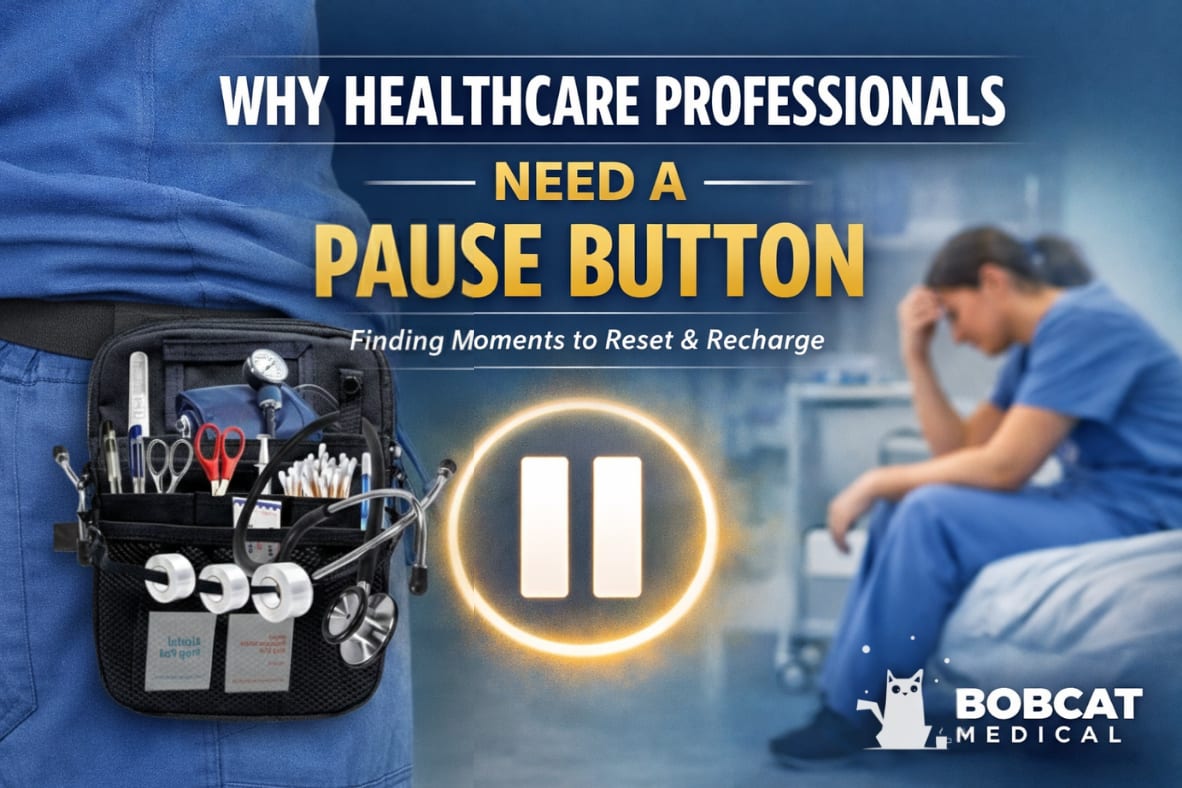
The Relentless Pace: Why Healthcare Professionals Need a Pause Button
The alarm blares, signaling the start of another demanding shift. You’ve barely had your coffee before you’re charting, assessing, and responding to urgent calls. For healthcare professionals like you, nurses, paramedics, ED, ICU, and L&D staff, the pace is relentless. There’s little room for error, and even less for personal downtime. This constant high-stress environment can take a significant toll, leading to burnout, fatigue, and a feeling of being perpetually overwhelmed.
We understand this intimately at Bobcat Medical. Our team, built by medical professionals here in Sacramento, CA, knows firsthand the unique pressures you face. It’s not just about managing patient care; it’s also about managing your own well-being in a chaotic landscape. While a two-week vacation might be a distant dream, what if you could find moments of calm and recharge within the busiest of shifts?
The answer lies in the often underestimated power of micro breaks and intentional mindfulness. These are not luxuries; they are essential tools for resilience that support focus, empathy, and personal well-being. Studies continue to show that healthcare burnout is a widespread issue. According to the Centers for Disease Control and Prevention, health workers face a growing mental health crisis, with increased reports of burnout, stress, and poor mental health outcomes compared with other worker groups. Finding those small windows to reset is not just beneficial; it is essential.

Mastering the Five-Minute Micro-Break: Strategies That Work
You might be thinking, "Five minutes? I don't even have five seconds!" We hear you. But a micro-break isn't about escaping your duties; it's about strategically injecting brief moments of physical or mental disengagement to enhance your subsequent performance. Think of it as a quick system reboot for your brain and body.
The key is intentionality and preparation. Having your essential gear organized and easily accessible can actually save you those precious minutes throughout your shift. For instance, a well-designed Nurse Fanny Pack from Bobcat Medical ensures your scissors, pens, and flush kits are always at your fingertips, reducing time spent searching and freeing up small pockets of time.
Here are some field-tested strategies for integrating five-minute micro-breaks, even in the most demanding environments:
- The "One Task" Reset: After completing a particularly intense task (e.g., patient admission, complex medication administration, difficult conversation), take 1-2 minutes. Step away from your immediate workspace if possible.
- Breathe and Scan: Find a quiet corner, even if it's just the supply closet, for 60 seconds. Close your eyes and take three deep, slow breaths. As you exhale, mentally scan your body for tension and consciously release it.
- Hydration & Movement: Grab your water bottle and walk to the furthest water cooler. Hydrate mindfully, focusing on the cool sensation. This simple movement can break up physical stagnation.
- Sensory Engagement: Focus on one non-work-related sensation for a minute. The smell of your hand lotion, the taste of a small piece of dark chocolate, or the feeling of your feet on the floor.
- Mini-Stretch Session: Do a few simple stretches – neck rolls, shoulder shrugs, wrist circles. These can be done discreetly and help relieve physical tension built up from long hours of standing or charting.
These brief pauses are not wasted time; they are investments. Research in psychology and cognitive science shows that short, frequent breaks, often called micro breaks, can help restore attention, reduce mental fatigue, and support sustained performance during extended periods of work. By integrating small resets into your workflow, you are not just surviving your shift; you are creating moments to recharge and refocus.
Explore how efficient gear can make these breaks possible by helping you stay organized. Browse our full collection of medical accessories for demanding shifts today.
Mindfulness on the Go: Bringing Calm to the Chaos
Mindfulness is often associated with long meditation sessions, which isn't practical during a busy shift. However, "on-the-go" mindfulness is about bringing a focused awareness to the present moment, even amidst the chaos. It's a mental muscle you can train, and even a few seconds can make a difference.
The goal isn't to clear your mind, but to observe your thoughts and feelings without judgment, gently redirecting your focus. This practice can interrupt the stress response cycle, allowing for clearer thinking and more compassionate patient interactions. Imagine being able to process a high-stress situation with a little more clarity, rather than feeling completely overwhelmed.
Simple mindfulness techniques for your workday:
- Mindful Handwashing: As you scrub, focus on the warmth of the water, the scent of the soap, the sensation on your hands. Engage all your senses in this routine task.
- "STOP" Practice: When you feel overwhelmed,
- S – Stop what you're doing,
- T – Take a breath,
- O – Observe your thoughts and feelings,
- P – Proceed with awareness.
This can be done in 30 seconds.
- Focused Listening: When talking to a patient or colleague, truly listen without formulating your response. Give them your full, undivided attention for that brief interaction. This enhances connection and grounds you.
- The "Stethoscope Moment": As you don your stethoscope, take a conscious moment to feel its weight, its smooth surface. This small ritual can be a grounding anchor before an assessment. Our innovative Magnetic Stethoscope Holder or Hook & Loop Velcro Stethoscope Holder allows for quick, secure access, reducing fumbling and giving you an extra moment of calm before use.
The National Center for Complementary and Integrative Health, a branch of the NIH, notes that mindfulness and meditation practices may help reduce stress and support emotional well-being, with research suggesting benefits for anxiety, mood regulation, and overall mental resilience. Even brief moments of mindful awareness during the day can help interrupt stress cycles and bring attention back to the present moment.

Equipping Your Oasis: Gear That Supports Your Well-being
Efficiency and organization are not just about saving time; they're about reducing the countless micro-stressors that chip away at your mental and physical reserves throughout a shift. When your essential tools are always within reach, secured, and organized, you eliminate frustrating searches and unnecessary movements. This small gain in efficiency accumulates, creating mental space for those precious micro-breaks and moments of mindfulness.
When tools don’t have a reliable place to go, when you’re constantly adjusting what you’re carrying, or when essential items slow you down because they’re hard to access, it creates unnecessary mental clutter. Having gear that keeps essentials organized and easy to reach can quietly remove those stressors, making it easier to stay focused on patient care instead of logistics. Simple solutions like secure stethoscope holders or well-designed organizers can help prevent common annoyances like awkward tucks, neck strain, or items slipping out of place, allowing you to move through your shift with fewer distractions.
Small workflow frustrations can add up quickly during a demanding shift. When essential tools are difficult to access or constantly need adjusting, it creates unnecessary mental clutter that pulls attention away from patient care. Having gear that keeps important items secure, organized, and easy to reach can help reduce these small but cumulative stressors, allowing healthcare professionals to move more efficiently and stay focused throughout the day. Research continues to show that workplace conditions and organizational support play an important role in reducing stress and burnout among healthcare workers, highlighting the value of systems and tools that minimize everyday friction in clinical environments.
Because our team comes from clinical backgrounds, we focus on designing tools that solve real workflow frustrations healthcare professionals face every day. We design our products with real clinical environments in mind and stand behind their quality. Over 1,000 healthcare professionals have already experienced the Bobcat Medical difference, finding functionality, a touch of style, and enjoyment in their daily routine.
Learn more about our commitment to quality and why we do what we do on our About Bobcat Medical page. We believe your gear should work as hard as you do.
Beyond the Shift: Sustaining Wellness for Long-Term Resilience
While micro-breaks and on-the-go mindfulness are powerful tools for in-shift survival, true resilience is built on a foundation of sustained wellness practices. These small, consistent efforts during your workday complement your broader self-care strategies, creating a robust shield against burnout and fatigue. The cumulative effect of these seemingly insignificant actions can profoundly impact your long-term physical and mental health.
Think of it as maintaining your most vital equipment: yourself. Just as you routinely check and maintain your medical instruments, your body and mind require regular attention. Integrating these short bursts of intentional self-care throughout your demanding shifts can help prevent the accumulation of chronic stress. This isn't about perfection; it's about progress: making small, realistic commitments to yourself.
These micro-practices help create space for recovery beyond your shift. Even small resets can support your body’s ability to regulate stress and prevent chronic fatigue. Burnout is widely recognized as a work-related phenomenon resulting from prolonged, unmanaged workplace stress, as defined by the World Health Organization’s ICD-11 classification of occupational phenomena. Continued data from the Centers for Disease Control and Prevention shows that nearly half of health workers reported feeling burned out often or very often during recent years, highlighting the ongoing need for practical strategies that support well-being both during and outside of work.
We are here to support you in every aspect of your professional journey. From providing top-tier, field-tested gear to offering practical insights on our Bobcat Medical Blog, we're dedicated to helping you work smarter, not harder. Your dedication to patient care is unwavering, and your commitment to yourself should be just as strong.
Ready to equip yourself with gear that truly works as hard as you do, freeing up mental space and moments for yourself? Browse our entire selection of premium medical accessories, designed to bring functionality and peace of mind to your demanding shifts. We offer free shipping on orders over $50 within the continental US, and our secure & trusted checkout makes ordering easy. If you are looking for tools designed to make demanding shifts a little smoother, explore our collection here.
Frequently Asked Questions
Q: How can I remember to take micro-breaks during a chaotic shift?
A: Tie your micro-breaks to routine tasks you already perform. For example, every time you document, take a minute to stretch. Every time you leave a patient's room, take two deep breaths before entering the next. Setting a silent timer on your watch for a few specific times during your shift can also serve as a gentle reminder.
Q: Won't taking breaks make me fall behind on my tasks?
A: Counterintuitively, short, intentional breaks often improve efficiency and focus, helping you complete tasks more effectively. Think of it as sharpening your saw; a brief pause can prevent errors and mental fatigue, ultimately making you more productive. Our organized gear, like a Nurse Fanny Pack, also saves time, making these breaks more feasible.
Q: What's the difference between a micro-break and just zoning out?
A: Zoning out is often passive and can leave you feeling more drained. A micro-break is an active, intentional choice to disengage and recharge, even for a minute. It involves a conscious shift of focus, whether it's on your breath, a sensory input, or a brief physical movement, designed to return you to your tasks feeling more refreshed.
Q: Can mindfulness really be practiced in just a few seconds?
A: Absolutely! Brief mindfulness practices, like taking a single mindful breath, noticing five things you can see, or really feeling your feet on the floor, can be done in mere seconds. The goal is not extended meditation but consistent, brief moments of present-moment awareness to interrupt stress patterns and re-center yourself.
Tags
Written by
Bobcat Medical Team
Delivering quality medical equipment and healthcare insights for nurses and healthcare professionals.
Related Articles

Nurse Advocacy: Speak Up Without Burning Bridges
Speaking up for patients is one of the hardest things nurses do. This research-backed guide covers the barriers, communication strategies, and how to advocate effectively without damaging your career.
Browse Our Medical Equipment
Quality medical equipment at competitive prices. Trusted by clinics and practices nationwide.
Shop Now