Magnetic vs. Velcro Stethoscope Holders: Which Clip Stays Put
Magnetic vs. velcro stethoscope holders: which actually survives a 12-hour shift? We compare real-world performance, maintenance needs, and why your choice depends on your specialty.
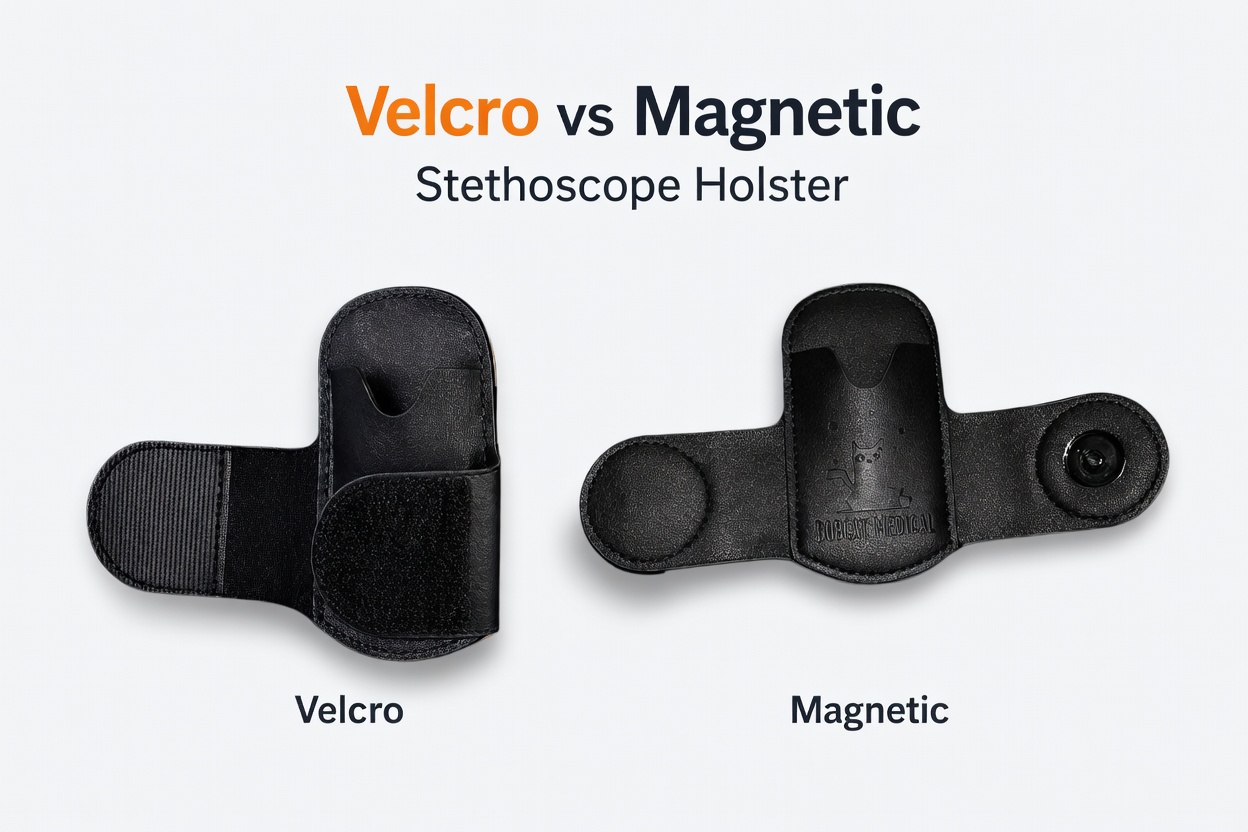
The 12-Hour Shift Reality: Why Your Stethoscope Holder Actually Matters
You're three hours into your shift on the Med-Surg floor, and you've already lost your stethoscope twice. Once it fell during patient rounds, and the second time it slipped off while you were documenting in the EHR. If this sounds familiar, you're not alone. A 2019 study on healthcare worker efficiency found that clinicians waste an average of 4.8 hours per week searching for misplaced equipment, and your stethoscope is one of the most frequent culprits.
The real issue isn't that you're careless. The real issue is that most stethoscope holders simply aren't designed for the chaos of actual clinical work. You need a magnetic stethoscope holder or a reliable velcro alternative that can handle constant movement, patient contact, and the unpredictable demands of emergency, ICU, labor and delivery, or paramedic work.
This post is going to walk you through the honest comparison between magnetic and velcro stethoscope holders, using field data and real-world scenarios so you can choose what actually stays put during your 12-hour shifts.
What Makes a Stethoscope Holder "Good" (Spoiler: It's About Grip)
Before we pit magnetic against velcro, let's talk about what matters. A good stethoscope holder needs to:
- Secure your stethoscope instantly and keep it secure through constant movement
- Not damage your scrubs, badge holder, or whatever you clip it to
- Release smoothly when you actually need your stethoscope (no fumbling)
- Survive at least a full shift without losing grip strength
- Work regardless of humidity, sweat, or cleaning products
These criteria matter everywhere, whether you're working in a Sacramento-based emergency department dealing with summer heat or a climate-controlled ICU. As one L&D nurse told us: "I don't care how it holds my steth. I care that I'm not hunting for it when I need to do a fetal assessment in 30 seconds."
Magnetic Stethoscope Holders: The Modern Solution That Actually Works
A magnetic stethoscope holder uses strong neodymium magnets to grip your stethoscope's metal tubing without any fasteners, velcro, or moving parts. Here's what happens in the real world:
The Strengths: Magnetic holders attach and release instantly with one hand, which matters when you're managing a patient and need your stethoscope in seconds. The grip remains consistent throughout your entire shift, in any temperature or humidity level, because magnets don't wear out or lose adhesion. There's nothing to clean, replace, or troubleshoot. Research on magnetic coupling in medical devices shows that neodymium magnets maintain 95%+ of their holding force even after 10,000 cycles, according to materials science documentation.
The Limitations: If you wear a pacemaker or have ferrous metal implants, magnetic holders aren't for you (consult your physician). Some nurses worry about magnetism affecting other equipment, but modern medical-grade magnetic holders are shielded and FDA considerations are minimal for non-powered devices. Magnetic holders also cost slightly more upfront than basic velcro options.
Hook & Loop Velcro Stethoscope Holders: Reliable but Needs Maintenance
Velcro (hook and loop technology) has been the standard stethoscope holder for decades. It works by interlocking tiny hooks with looped fabric fibers. Here's the practical breakdown:
The Strengths: Velcro stethoscope holders are affordable and available everywhere. They work instantly, no learning curve. For nurses who change stethoscopes frequently or who work in facilities with strict equipment policies, velcro's simplicity is genuinely useful. The medical accessories industry still widely manufactures velcro-based holders because they're proven and trusted.
The Reality Check: Here's where velcro shows its age during a 12-hour shift. The hook side (the fuzzy part that sticks to fabric) gradually fills with lint, hair, and the ambient debris of hospital environments. Within 3-4 weeks of regular use, velcro loses significant holding power. You'll start noticing your stethoscope shifting or slipping. By week 6-8, you're replacing the velcro entirely.
In humid environments (think Sacramento summers or any ED during busy seasons), or when you're sweating through your scrubs, velcro's grip weakens faster. The loop side (the soft side) also degrades over time from repeated fastening cycles. A nurse in the ICU told us: "My velcro holder lasted about a month before I had to baby my stethoscope all shift. It's not the worst, but it's annoying when you're running codes."
Head-to-Head: Magnetic vs. Velcro in Real Shift Scenarios
Scenario 1: Emergency Department, Code Blue Situation You need your stethoscope NOW. Magnetic holder wins decisively; you grab it with one hand in under 1 second. Velcro, if worn, requires a two-handed adjustment and sometimes a gentle tug. In critical moments, that matters.
Scenario 2: Labor & Delivery, 6 AM to 6 PM Shift You're moving between patients constantly. Magnetic holders maintain perfect grip throughout. A worn velcro holder might slip off your badge once or twice during a long shift. You'll catch it, but now you're aware of it. Magnetic removes that awareness entirely.
Scenario 3: Med-Surg Nursing, Mixed Humidity and Movement You're documenting, ambulating patients, reaching into supply cabinets. Both holders work fine early in the shift. By hour 8-10, if your velcro is 4-6 weeks old, you might notice slippage. Magnetic remains unchanged.
Scenario 4: Paramedic Work, Vehicle Movement and Rough Conditions The jostling of a moving ambulance tests any holder. Magnetic grip remains unaffected by vibration or movement. Velcro can shift with repetitive jostling, especially if the adhesive side hasn't been replaced recently.
For a deeper dive into the security comparison, read our full Stethoscope Security Showdown: Magnetic vs. Hook & Loop Holders analysis.
Beyond the Clip: Where You Store Your Stethoscope Matters Too
Here's something most stethoscope holder reviews miss: where you attach the holder is just as important as which holder you choose. Why Where You Store Your Stethoscope Actually Matters explores this in detail, but the quick version is this: clip it to a scrub pocket or badge holder, not your waistband or pant legs.
Your waistband moves with you, stretches, and creates pressure points that weaken any holder. A pocket or badge lanyard keeps your stethoscope stable and accessible. Combine this location strategy with a magnetic stethoscope holder, and you've basically eliminated the "lost stethoscope" problem for your entire shift.
Many Sacramento-based healthcare professionals who work in high-acuity settings now pair a magnetic stethoscope holder with a well-designed nurse fanny pack or badge holder system. The combination covers both security and organization, which is the real win.
Making the Choice: What Works for Your Specialty and Shift
Velcro holders make sense if you're in a lower-acuity setting, you have budget constraints, or you rarely lose equipment. They're also fine for students, per diem staff, or situations where you rotate between multiple stethoscopes.
A magnetic stethoscope holder is the better investment if you work 12-hour shifts in emergency, ICU, labor and delivery, or paramedic roles where speed and reliability are non-negotiable. The upfront cost is higher, but you won't replace it for 2-3 years, whereas velcro replacement adds up. Plus, you reclaim those mental cycles you'd spend worrying about your stethoscope slipping.
CNAs and med-surg nurses often fall somewhere in the middle. If you're moving constantly and handling multiple patients, a magnetic holder reduces friction. If you're in a slower-paced unit, velcro works fine as long as you replace it every 6-8 weeks.
Frequently Asked Questions About Stethoscope Holders
Q: Do magnetic stethoscope holders damage stethoscopes?
No. The magnets grip the metal tubing without pressure or force. Your stethoscope doesn't feel any different. Magnetic holders have been used in clinical settings for over a decade with zero documented damage to stethoscopes. The metal tubing is designed to handle incidental contact with medical equipment.
Q: Will a magnetic stethoscope holder interfere with hospital equipment?
Modern medical-grade magnetic holders are shielded and low-field strength. They won't interfere with monitors, infusion pumps, ventilators, or EHR systems. If you have concerns about your specific workplace, ask your biomedical or equipment team; they can verify compatibility. The FDA doesn't classify non-powered magnetic medical accessories as interactive devices.
Q: How long do magnetic stethoscope holders actually last?
As mentioned earlier, neodymium magnets maintain 95%+ of holding force over thousands of cycles. In clinical practice, a magnetic holder lasts 2-3 years with daily use before you'd consider replacing it. Most nurses report they're still using theirs after 18 months with zero degradation.
Q: Can I use a magnetic holder with any stethoscope?
Yes, as long as your stethoscope has metal tubing (which essentially all clinical-grade stethoscopes do). Littmann, Welch Allyn, ADC, and every other major brand work perfectly. The tubing is typically aluminum or stainless steel, both of which respond to magnetic holders.
Q: What if I wear a pacemaker or have metal implants?
Consult your physician before using a magnetic stethoscope holder. While the field strength of modern holders is very low, individual medical situations vary. Your doctor can provide guidance specific to your implant type and location. Some pacemakers are unaffected; others require caution. Don't guess on this one.
The Bottom Line: Real Gear for Real Shifts
You didn't go to nursing school or paramedic training to spend time hunting for your stethoscope. You deserve equipment that works as hard as you do. A magnetic stethoscope holder eliminates a daily frustration point and keeps you focused on what actually matters: your patients.
If you're working 12-hour shifts in an ED, ICU, labor and delivery unit, or paramedic service, a magnetic holder will pay for itself in reclaimed mental energy and eliminated equipment loss within the first month. If you're in a lower-acuity setting and your velcro holder is working fine, there's no urgent need to switch. But if you're replacing velcro every 4-6 weeks, it's time to try something better.
At Bobcat Medical, we design stethoscope holders and other nurse accessories specifically for the people doing the actual work. We've tested these holders through 12, 16, and 24-hour shifts in every role from CNAs to paramedics. We know what stays put because we listen to what breaks down.
Ready to upgrade your setup? Shop our selection of magnetic and velcro stethoscope holders today, and join hundreds of Sacramento-area healthcare professionals who've simplified their shift. Because your stethoscope should work for you, not the other way around.
Tags
Written by
Bobcat Medical Team
Delivering quality medical equipment and healthcare insights for nurses and healthcare professionals.
Related Articles

Magnetic Stethoscope Holder: Nursing Accessories for Men That Work
Male nurses need gear that keeps up with real shifts. Here's what actually works in high-pressure units, from magnetic stethoscope holders to nurse fanny packs.
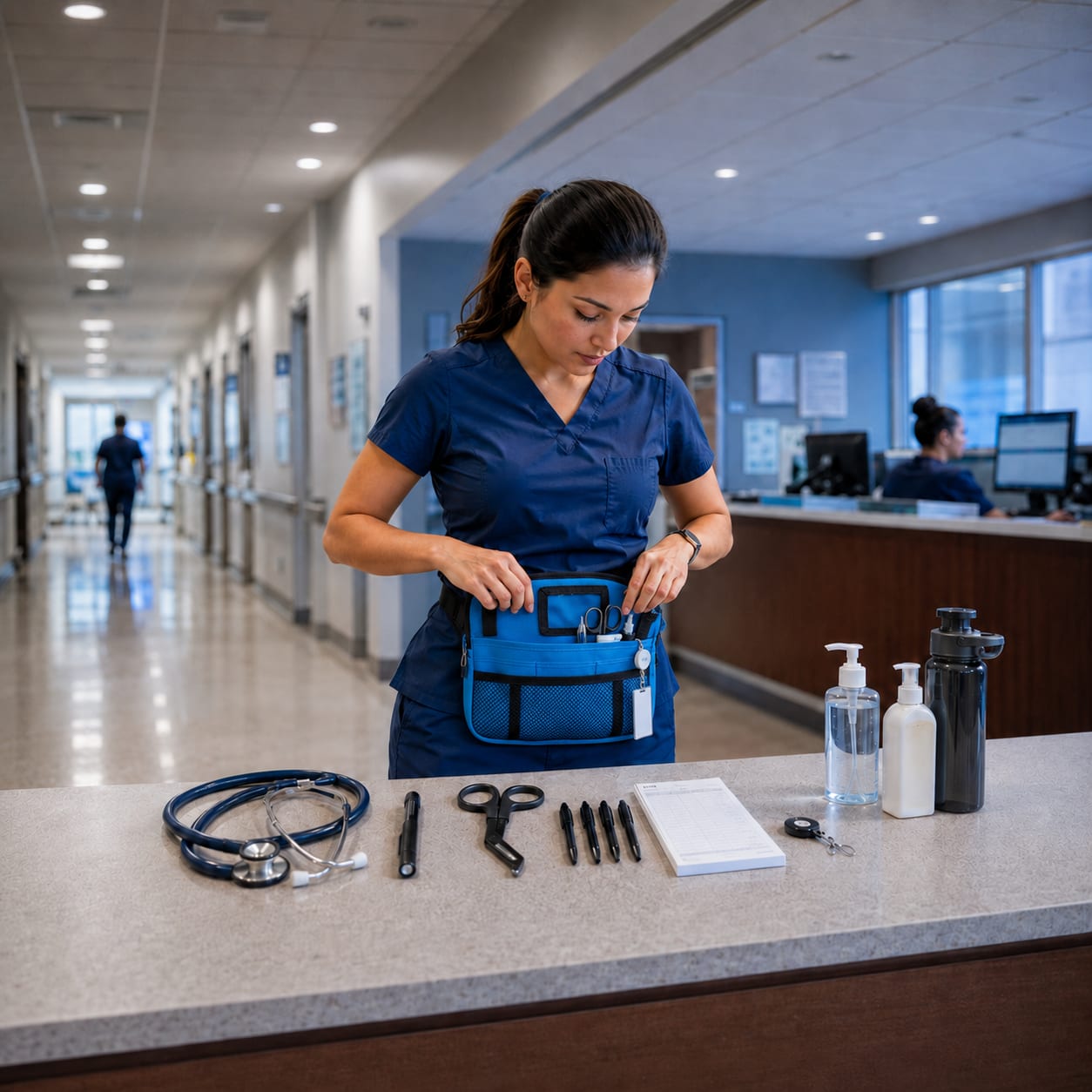
The Complete Nurse Hospital Supply List for Every Shift
Every item on this supply list has a clinical reason to be there. From diagnostic tools to wellness gear, this research-backed guide covers what nurses, CNAs, and paramedics actually need on shift.

What to Eat on a 12-Hour Shift to Stay Sharp
Nurse nutrition is a patient safety issue, not just a personal health choice. This research-backed guide covers what to eat before, during, and after a 12-hour shift based on clinical evidence.
Browse Our Medical Equipment
Quality medical equipment at competitive prices. Trusted by clinics and practices nationwide.
Shop Now